Robe Fabric Guide: Waffle vs Terry vs Satin
Ask ten spas which robe fabric is best and you will get ten answers, because the honest answer is “it depends.” This robe fabric guide cuts through that by comparing the three fabrics people ask about most, waffle, terry, and satin, on the qualities that actually matter when a guest is wearing the robe and when your laundry team is washing it for the hundredth time. Fabric is the single biggest driver of how a robe feels, how long it lasts, and how much it costs to run, so it deserves a clear-eyed comparison.
Use this robe fabric guide to match a weave to your climate, your turnover, and the moment in the guest journey where the robe appears, because a poolside cover-up and a lounge robe have almost nothing in common.
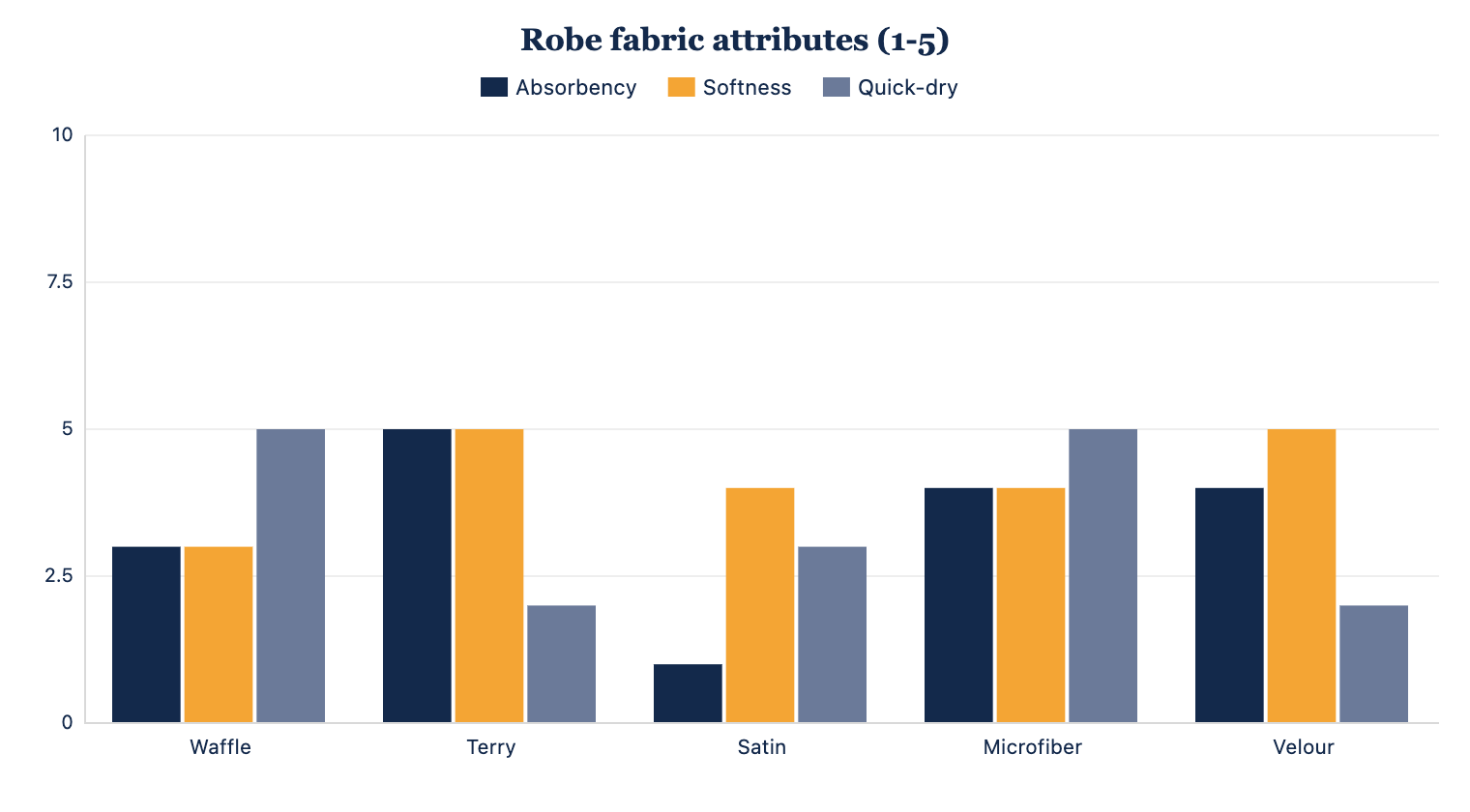
Waffle weave: light, modern, quick-drying
Waffle fabric gets its name from the small textured squares woven into it, which trap air and give a lot of surface area in a light, thin material. That structure makes waffle robes fast-drying and breathable, a natural fit for warm climates, high-turnover day spas, and guests who dislike heavy robes. The look is crisp and contemporary, and the low weight cuts drying time and energy cost in a busy laundry. The trade-off is that waffle is less plush and less insulating than terry, so it can feel thin to a guest expecting a cocoon.
Terry cloth: plush, absorbent, classic
Terry is the looped cotton toweling most people picture when they think “hotel robe.” Those loops make it exceptionally absorbent and soft, which is why terry rules anywhere guests are wet, after a soak, a shower, or a pool. It feels warm and enveloping, the definition of pampered. The costs are weight and drying time: terry is heavy, slower to dry, and more demanding on a laundry, and a cheap terry will shed and pill if the loop density is low. Velour, a sheared terry, adds a smooth face for an even more premium feel.
Satin: luxurious to look at, not to dry with
Satin, whether silk or a poly-satin blend, is prized for its liquid drape and cool, smooth touch. It photographs beautifully and feels indulgent, which is why satin robes are popular for bridal parties, boutique hotels, and relaxation lounges. But satin barely absorbs water, so it is the wrong choice anywhere a guest is damp. Think of satin as a garment for looking and lounging, not for drying off. Many spas get the best of both worlds with a waffle or terry robe finished with satin trim on the cuffs and collar.
Weight, GSM, and what it signals
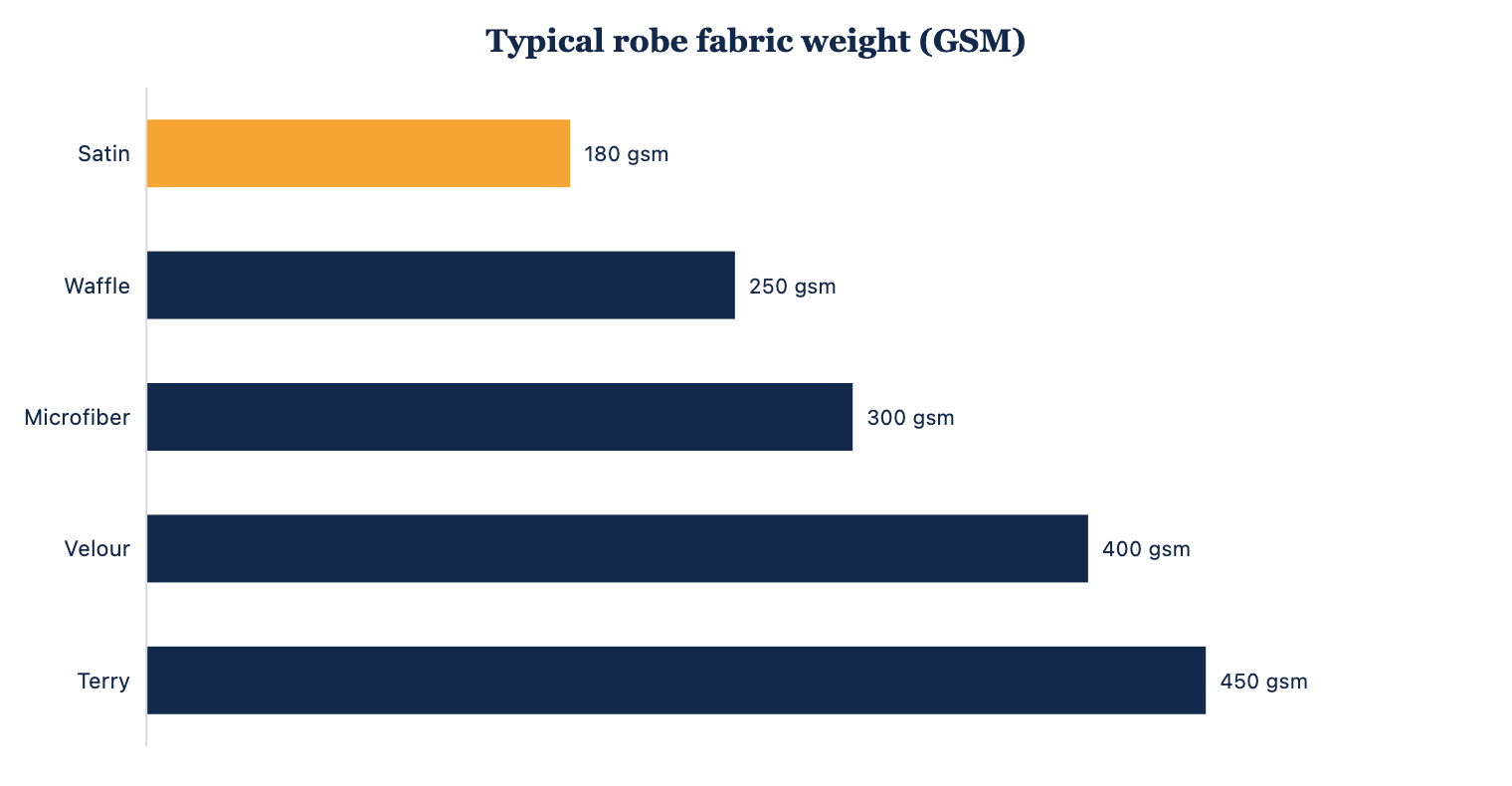
Fabric weight, measured in grams per square meter, is the shorthand pros use for plushness. A light waffle might sit around 250 GSM; a plush terry can exceed 450. Higher GSM feels more luxurious and insulating but costs more to buy, ship, and dry. Matching GSM to your setting is the quiet skill in robe buying: a heavy robe in a hot-climate day spa is a laundry headache, while a thin robe in a mountain retreat feels stingy. The chart above shows the typical spread.
| Fabric | Absorbency | Best use |
|---|---|---|
| Waffle | Good | Warm climates, fast turnover |
| Terry | Excellent | Pools, hydrotherapy, resorts |
| Velour | Very good | Premium plush feel |
| Satin | Poor | Lounge, bridal, boutique looks |
| Microfiber | Good | Budget-friendly, quick-dry |
Microfiber and blends: the value option
Beyond the big three, microfiber and cotton-poly blends deserve a mention because they solve a real budget problem. Microfiber dries quickly, resists staining, and feels surprisingly soft for its price, which makes it popular with salons and high-volume operations watching laundry costs. Cotton-poly blends split the difference between terry’s absorbency and polyester’s durability and quick drying, and they tend to shrink and wrinkle less than pure cotton. Neither will feel as indulgent as a heavy terry, but for a business laundering hundreds of robes a week, the durability and lower drying cost can matter more than the last ten percent of plushness.
How weave affects branding
Fabric also changes how your logo looks. Flat, tight weaves like satin and microfiber take crisp embroidery and printing beautifully, showing fine detail cleanly. Textured, looped fabrics like terry can swallow small lettering, so logos on terry usually work best kept simple and slightly larger, or placed on a smooth woven patch. If a detailed logo is central to your brand, factor that into the fabric choice rather than discovering the limitation after your first sample arrives.
Seasonal and climate considerations
Do not overlook the seasons. A spa in a hot, humid region can run a lighter waffle year-round, while a mountain or northern-climate retreat may want a plush terry in winter and a lighter option in summer. Some operations keep two seasonal sets and rotate them, which spreads wear across the year and keeps guests comfortable regardless of the weather outside. If your building runs cool for treatment reasons, err toward the warmer, heavier weave so guests are never left shivering between services.
How to choose for your space
Start from the wettest moment a guest wears the robe. If they step straight from water into it, absorbency wins and you want terry. If the robe is mostly for warmth and modesty between treatments, a light waffle keeps things breathable and easy to launder. If the robe exists chiefly to look beautiful in photos and lounge areas, satin or satin-trimmed earns its place. Many operations run two fabrics, a workhorse for treatments and a showpiece for the lounge.
Care that protects your investment
Whatever you choose, skip fabric softener on waffle and terry, it coats the fibers and kills the absorbency you paid for. Wash at recommended temperatures, dry fully to prevent mildew in the loops, and rotate stock so wear spreads evenly. Treated well, a quality robe stays presentable for years; treated carelessly, even the best fabric greys and pills fast.
Bottom line
This robe fabric guide comes down to a simple rule: match the weave to the wettest moment the robe is worn. Terry for water, waffle for breezy turnover, satin for looks and lounging, and GSM tuned to your climate. Get that alignment right and every other decision, color, embroidery, sizing, falls neatly into place.
Not sure which fabric fits?
Send us your treatments and climate and we will recommend a weave, weight, and finish, then spec your custom robes.
Get a QuoteHome · About · Buying guides · Companion guide: custom spa robes
Win Free Stuff
Enter below for a chance to win plus receive 10% off your first order.
🎉 You are in!
Check your email for your 10% off code. Good luck!