Monogramming Custom Robes: Thread, Placement & Font Guide
Monogramming Custom Robes: Thread, Placement, and Font Guide
A monogram is what turns a nice robe into a keepsake, and getting it right is easier than it looks. Monogrammed robes hinge on three choices: where the monogram sits, what thread it is stitched in, and which font carries it. This guide walks through all three so your monogrammed robes look custom, not clip-art.
The best monograms are legible, well-placed, and consistent across a set — whether you are personalizing a single bridal robe or a matching bridal party.
Where to place the monogram
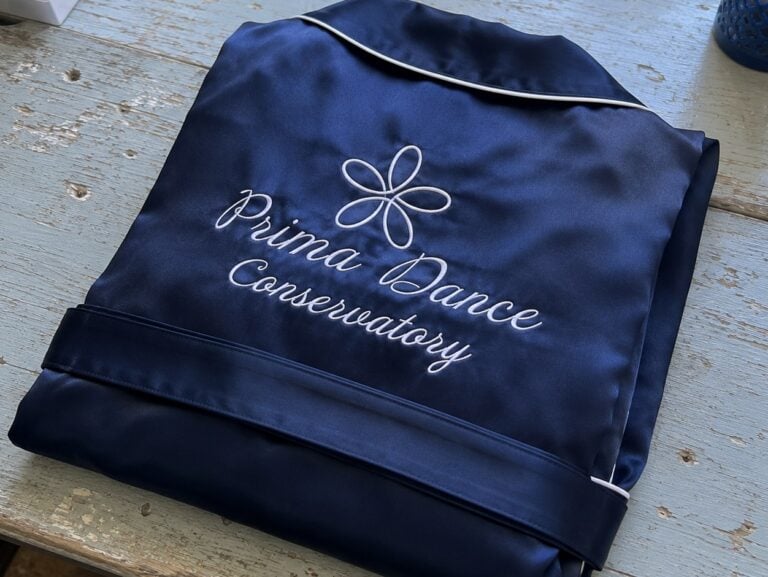
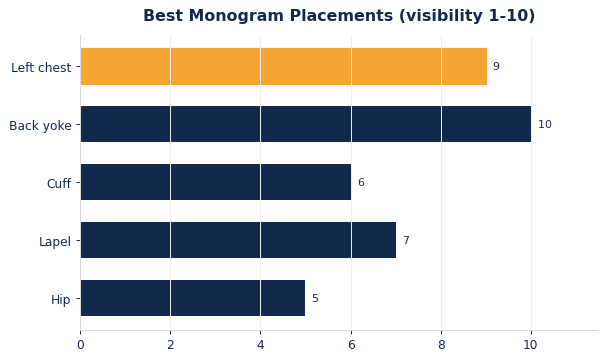
Left chest is the classic, understated placement; a large back-yoke monogram is bold and photographs beautifully for bridal parties. Cuffs and lapels suit subtle initials. The visibility ranking below helps you choose.
For a party set, keep placement identical across every robe and vary only the initials — consistency is what makes the group photo look designed.
Thread and font choices
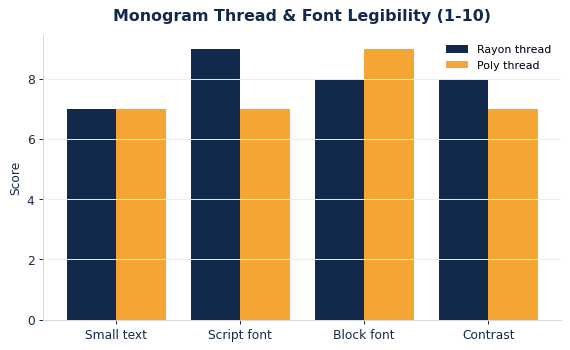
Rayon thread has a soft sheen that flatters script fonts; polyester thread is more durable and crisp for block lettering. Match thread to font: script for elegant, flowing initials; block for modern, high-legibility marks.
Getting a proof right
Always approve a digitized proof before a full run, especially for script fonts where letter connections can vary. Confirm initial order (many monograms place the last-name initial larger and centered) and thread color against the robe fabric.
| Choice | Elegant | Modern |
|---|---|---|
| Font | Script | Block |
| Thread | Rayon | Poly |
| Placement | Left chest | Back yoke |
Ordering robes for a salon or spa instead? See our companion guide, our Custom Kimono Robes for Salons & Hair Stylists. Browse our custom kimonos & robes or contact us.
Getting the monogram order and initials right
Monogram conventions trip up more orders than any thread or font choice, so it is worth getting the initials right before you proof. A traditional three-letter monogram places the last-name initial larger and in the center, with the first-name initial to the left and the middle-name initial to the right; a modern block monogram often uses first-middle-last in even sizes reading left to right. For a couple or a bridal party, decide whether you are using maiden or married initials and keep the convention identical across every robe so the set matches.
When in doubt, spell out exactly what you want on the order — the letters, their order, and which is largest — rather than assuming the decorator will infer it. A quick note like ‘block monogram, first-middle-last, equal size’ removes ambiguity. Confirming this on a digitized proof, especially for connected script, prevents the disappointment of a beautiful robe with the initials in the wrong arrangement.
Thread colors, contrast, and fabric interactions
Thread color makes or breaks legibility, and the right choice depends on the robe fabric behind it. On a light robe, a tonal thread reads elegant and subtle while a dark thread reads bold and graphic; on a dark robe, a light or metallic thread pops. For small or delicate initials, prioritize contrast so the monogram is readable rather than lost against the fabric. Consider how the thread’s sheen interacts with the material, too — a glossy rayon on a matte waffle robe catches light beautifully.
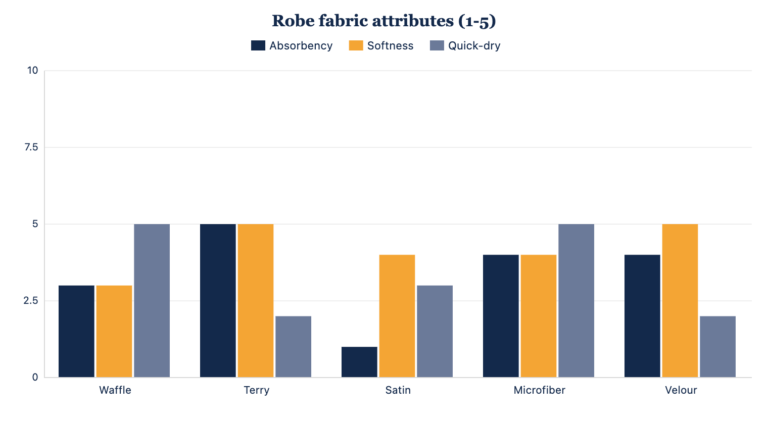
Fabric texture also affects how fine detail holds. Smooth satin supports thin script strokes cleanly, while a textured terry or waffle favors slightly bolder lettering that will not get swallowed by the pile. Matching the font weight to the fabric keeps even a small monogram crisp, which is exactly where a proof on the actual robe material earns its keep.
Ordering monogrammed sets for parties and gifts
Monogrammed robes are a favorite for bridal parties, family gifts, and brand gifting, and a little coordination keeps a set looking intentional. Standardize the placement, font, and thread color across every robe and vary only the initials, so a lineup of robes reads as one designed collection in photos. For mixed groups, decide on a single placement — a large back-yoke monogram photographs wonderfully for a bridal party — and apply it consistently.
Build in time for a digitized proof and production, especially for connected scripts or larger sets, and order a spare or two to cover a late addition to the group. For gifting programs, saving your approved monogram template lets you reorder singles later without redesigning, so a new team member or family member gets a matching robe without starting over.
Choosing a monogram style that suits the occasion
The monogram style should match the mood of the moment the robe is for. A flowing script feels romantic and traditional, which suits bridal robes, anniversary gifts, and spa keepsakes; a clean block or sans-serif monogram reads modern and unisex, which works well for corporate gifting, salons, and men’s robes. Interlocking or circle monograms add a decorative, crest-like feel for a more formal look, while a simple stacked initial keeps things understated. Picking the style with the occasion in mind ensures the finished robe feels right, not just legible.
Scale and placement reinforce the style you choose. A large back-yoke monogram makes a statement and photographs beautifully for a bridal party, while a discreet left-chest monogram suits everyday and professional robes. Keeping the style, size, and placement consistent across a set is what turns a group of individually monogrammed robes into a collection that looks designed rather than assembled piece by piece.
Common questions about monogramming robes
What is the correct order for a monogram?
A traditional monogram places the last-name initial larger in the center, with first-name initial left and middle-name initial right. A modern block monogram often reads first-middle-last in equal sizes. Choose one convention and keep it identical across a set.
Rayon or polyester thread for a monogram?
Rayon has a soft sheen that flatters flowing script fonts, while polyester is more durable and crisp for block lettering. Match the thread to the font, and choose a color with good contrast against the robe fabric for legibility.
Where should the monogram go on a robe?
Left chest is the classic, understated placement, while a large back-yoke monogram is bold and photographs beautifully for bridal parties. Cuffs and lapels suit subtle initials. For a set, keep placement identical and vary only the initials.
Do I need to approve a proof?
Yes, especially for script fonts where letter connections vary. A digitized proof lets you confirm the initial order, sizing, and thread color against the robe fabric before a full run, preventing costly mistakes on a group order.
Can I reorder matching monogrammed robes later?
Yes. Saving your approved monogram template and specs lets you reorder singles that match an existing set, so a new bridal-party member, family member, or team hire gets a coordinated robe without redesigning. Keeping the same placement, font, and thread color is what keeps the reorder consistent, and noting the exact fabric and robe style on file avoids surprises when the new piece arrives.
Personalizing robes for your party or brand?
We’ll match monogram placement, thread, and font to the look you want.
Get a QuoteMonogramming Custom Robes: Thread, Placement, and Font Guide
A monogram is what turns a nice robe into a keepsake, and getting it right is easier than it looks. Monogrammed robes hinge on three choices: where the monogram sits, what thread it is stitched in, and which font carries it. This guide walks through all three so your monogrammed robes look custom, not clip-art.
The best monograms are legible, well-placed, and consistent across a set — whether you are personalizing a single bridal robe or a matching bridal party.
Where to place the monogram
Left chest is the classic, understated placement; a large back-yoke monogram is bold and photographs beautifully for bridal parties. Cuffs and lapels suit subtle initials. The visibility ranking below helps you choose.
For a party set, keep placement identical across every robe and vary only the initials — consistency is what makes the group photo look designed.
Thread and font choices
Rayon thread has a soft sheen that flatters script fonts; polyester thread is more durable and crisp for block lettering. Match thread to font: script for elegant, flowing initials; block for modern, high-legibility marks.
Getting a proof right
Always approve a digitized proof before a full run, especially for script fonts where letter connections can vary. Confirm initial order (many monograms place the last-name initial larger and centered) and thread color against the robe fabric.
| Choice | Elegant | Modern |
|---|---|---|
| Font | Script | Block |
| Thread | Rayon | Poly |
| Placement | Left chest | Back yoke |
Ordering robes for a salon or spa instead? See our companion guide, our Custom Kimono Robes for Salons & Hair Stylists. Browse our custom kimonos & robes or contact us.
Getting the monogram order and initials right
Monogram conventions trip up more orders than any thread or font choice, so it is worth getting the initials right before you proof. A traditional three-letter monogram places the last-name initial larger and in the center, with the first-name initial to the left and the middle-name initial to the right; a modern block monogram often uses first-middle-last in even sizes reading left to right. For a couple or a bridal party, decide whether you are using maiden or married initials and keep the convention identical across every robe so the set matches.
When in doubt, spell out exactly what you want on the order — the letters, their order, and which is largest — rather than assuming the decorator will infer it. A quick note like ‘block monogram, first-middle-last, equal size’ removes ambiguity. Confirming this on a digitized proof, especially for connected script, prevents the disappointment of a beautiful robe with the initials in the wrong arrangement.
Thread colors, contrast, and fabric interactions
Thread color makes or breaks legibility, and the right choice depends on the robe fabric behind it. On a light robe, a tonal thread reads elegant and subtle while a dark thread reads bold and graphic; on a dark robe, a light or metallic thread pops. For small or delicate initials, prioritize contrast so the monogram is readable rather than lost against the fabric. Consider how the thread’s sheen interacts with the material, too — a glossy rayon on a matte waffle robe catches light beautifully.
Fabric texture also affects how fine detail holds. Smooth satin supports thin script strokes cleanly, while a textured terry or waffle favors slightly bolder lettering that will not get swallowed by the pile. Matching the font weight to the fabric keeps even a small monogram crisp, which is exactly where a proof on the actual robe material earns its keep.
Ordering monogrammed sets for parties and gifts
Monogrammed robes are a favorite for bridal parties, family gifts, and brand gifting, and a little coordination keeps a set looking intentional. Standardize the placement, font, and thread color across every robe and vary only the initials, so a lineup of robes reads as one designed collection in photos. For mixed groups, decide on a single placement — a large back-yoke monogram photographs wonderfully for a bridal party — and apply it consistently.
Build in time for a digitized proof and production, especially for connected scripts or larger sets, and order a spare or two to cover a late addition to the group. For gifting programs, saving your approved monogram template lets you reorder singles later without redesigning, so a new team member or family member gets a matching robe without starting over.
Choosing a monogram style that suits the occasion
The monogram style should match the mood of the moment the robe is for. A flowing script feels romantic and traditional, which suits bridal robes, anniversary gifts, and spa keepsakes; a clean block or sans-serif monogram reads modern and unisex, which works well for corporate gifting, salons, and men’s robes. Interlocking or circle monograms add a decorative, crest-like feel for a more formal look, while a simple stacked initial keeps things understated. Picking the style with the occasion in mind ensures the finished robe feels right, not just legible.
Scale and placement reinforce the style you choose. A large back-yoke monogram makes a statement and photographs beautifully for a bridal party, while a discreet left-chest monogram suits everyday and professional robes. Keeping the style, size, and placement consistent across a set is what turns a group of individually monogrammed robes into a collection that looks designed rather than assembled piece by piece.
Common questions about monogramming robes
What is the correct order for a monogram?
A traditional monogram places the last-name initial larger in the center, with first-name initial left and middle-name initial right. A modern block monogram often reads first-middle-last in equal sizes. Choose one convention and keep it identical across a set.
Rayon or polyester thread for a monogram?
Rayon has a soft sheen that flatters flowing script fonts, while polyester is more durable and crisp for block lettering. Match the thread to the font, and choose a color with good contrast against the robe fabric for legibility.
Where should the monogram go on a robe?
Left chest is the classic, understated placement, while a large back-yoke monogram is bold and photographs beautifully for bridal parties. Cuffs and lapels suit subtle initials. For a set, keep placement identical and vary only the initials.
Do I need to approve a proof?
Yes, especially for script fonts where letter connections vary. A digitized proof lets you confirm the initial order, sizing, and thread color against the robe fabric before a full run, preventing costly mistakes on a group order.
Can I reorder matching monogrammed robes later?
Yes. Saving your approved monogram template and specs lets you reorder singles that match an existing set, so a new bridal-party member, family member, or team hire gets a coordinated robe without redesigning. Keeping the same placement, font, and thread color is what keeps the reorder consistent, and noting the exact fabric and robe style on file avoids surprises when the new piece arrives.
Personalizing robes for your party or brand?
We’ll match monogram placement, thread, and font to the look you want.
Get a Quote