Custom Kimono Robe Artwork: Files, Placement and Proofs
The best artwork for custom kimono robes is a vector logo or design file, placed for how the robe wraps and drapes, and simplified to suit embroidery or print. Get Custom Kimonos turns your files into a free mockup within 24 hours, so you can check placement, colors and every name on your kimonos before a single robe is made.
- Vector files (AI, EPS, SVG, vector PDF) give the cleanest kimono artwork
- Embroidery suits bold, simple art; print handles gradients, photos and all-over patterns
- Names and titles can change robe to robe within one order
- Free mockup within 24 hours, unlimited free revisions, minimum order 12
- Standard turnaround is about 2 weeks after proof approval
What artwork file should I send for custom kimono robes?
Send a vector file for custom kimono robes whenever you have one: AI, EPS, SVG or a PDF exported from a design program with fonts converted to outlines. Vector art is built from paths rather than pixels, so it scales cleanly from a small chest logo to a full back panel, and the embroidery digitizer or print operator can follow every edge.
Raster files such as PNG and JPG can still work for printed kimonos, but they need to be large and sharp at the size they will appear on the robe. A logo saved from a website header or a social profile picture usually looks soft once it is stretched across the back of a satin robe. If a raster file is all you have, Get Custom Kimonos can redraw simple marks during the mockup stage, and you see the result before you approve anything.
- Best: AI, EPS, SVG or vector PDF with outlined text
- Workable: a large PNG with a transparent background, made at full print size
- Risky: screenshots, small JPGs, logos copied from email signatures or social media
Ask whoever designed your logo or event graphic for the original production files. Most brand kits and wedding stationery designers keep them, and sending them first saves a revision round.
Where can artwork go on a custom kimono robe?
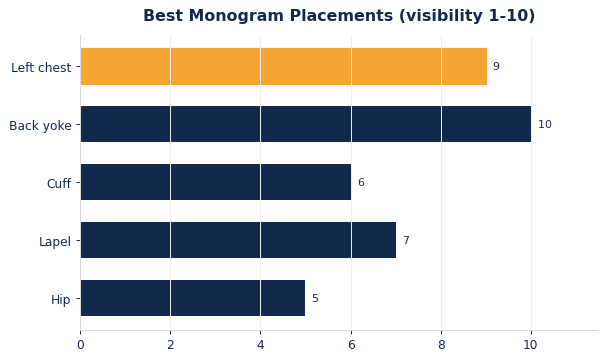
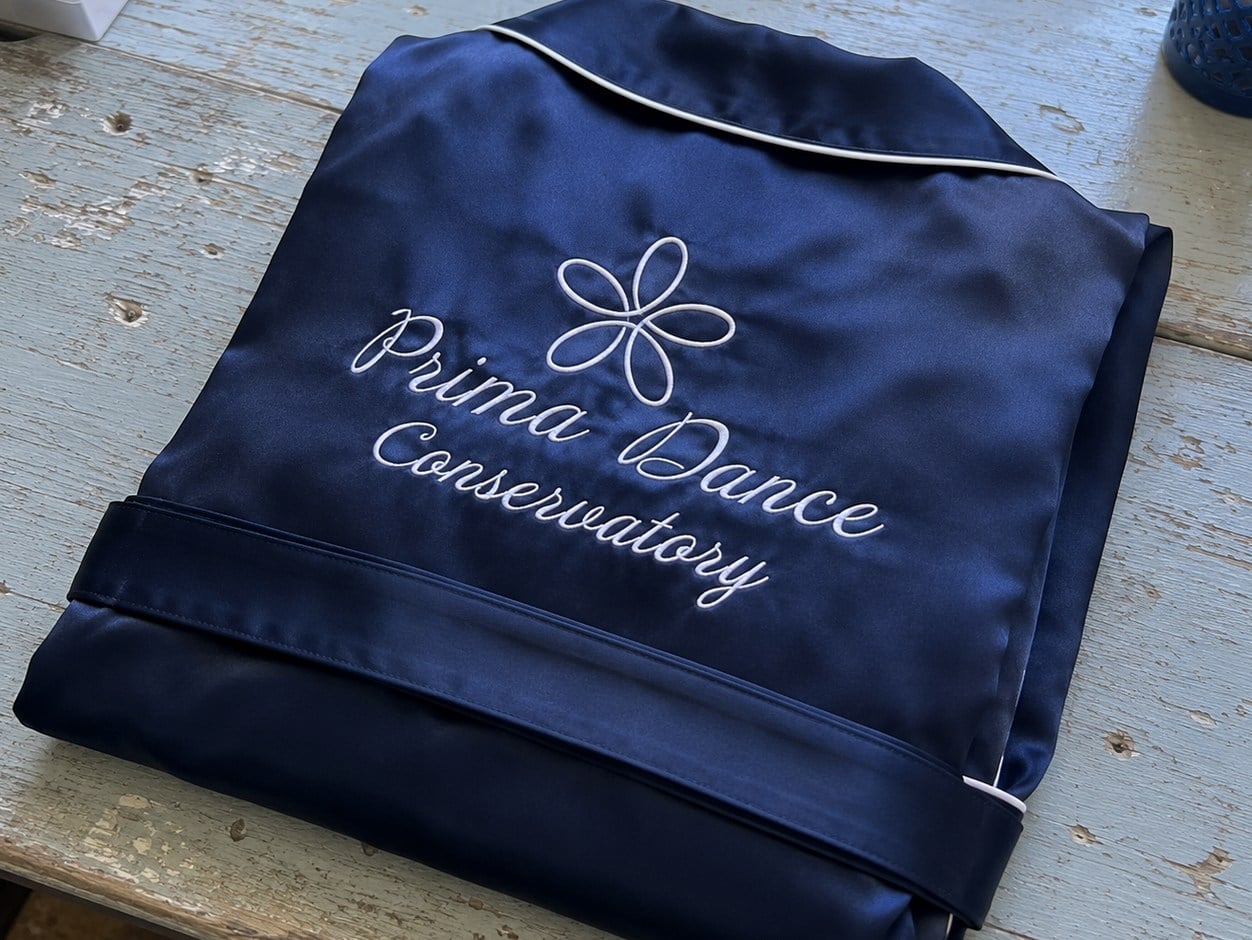
Artwork on a custom kimono robe usually goes in one of five places: the left chest, the full back panel, a sleeve, the lapel or collar band, or across the whole garment as an all-over print. Each spot suits a different kind of design, and choosing the location before you finish the art keeps proportions right.
| Placement | Best for | Decoration that suits it |
|---|---|---|
| Left chest | Small logos, monograms, a single name | Embroidery or print |
| Full back | Event names, team crests, titles like Bride or Coach | Print, glitter or large embroidery |
| Sleeve | Dates, numbers, sponsor marks | Embroidery or print |
| Lapel or collar band | Short words, repeating names | Print or fine embroidery |
| All-over | Festival patterns, florals, brand repeats | Full-color print on chiffon or satin |
Kimono robes have wide, flowing sleeves and a wrap front that overlaps when tied. That overlap matters: a design centered on the front of an open robe can be half hidden once the belt is closed. Get Custom Kimonos places chest art clear of the overlap on the mockup so you can see how it reads when the robe is worn.
How should I prepare artwork for embroidered kimono robes vs printed ones?
Embroidered kimono robes need simpler artwork than printed ones. Embroidery builds a design from thread stitches, so very thin lines, tiny lettering, soft gradients and photographic detail do not translate well. Printed kimonos can carry gradients, photos and many colors, which is why festival and floral styles are almost always printed.
For embroidery
- Use bold shapes and solid colors; each color becomes a separate thread.
- Keep script fonts large enough that loops do not fill in.
- Expect the digitizer to simplify fine outlines and drop shading.
- Choose thread colors that contrast with the robe, such as white or gold on black satin.
For print
- Send full-resolution art at the size it will appear.
- Flatten effects like drop shadows and glows, or tell us they should stay.
- For all-over patterns, supply a seamless repeat tile or the full layout.
- Keep critical text away from seams and the wrap overlap.
On waffle and terry spa styles, embroidery usually looks more premium because ink can sink into textured fabric. On smooth satin and chiffon, both methods work, and the choice comes down to the look you want. Get Custom Kimonos will recommend a method on the mockup if your art suits one better than the other.
How do I get colors right on satin and chiffon kimonos?
Colors on satin and chiffon kimonos shift slightly compared with a screen because the fabric itself changes how ink and thread look. Satin has a sheen that brightens light colors and deepens dark ones, while sheer chiffon lets skin and clothing underneath show through, which softens printed colors.
The most reliable way to hit a brand or wedding palette is to send a Pantone reference along with your art. Screen colors vary from phone to laptop, so a hex or RGB value alone can drift. If you only have a photo of a color, such as a bridesmaid dress swatch, include it with a note, and Get Custom Kimonos will match it as closely as the fabric allows.
- Light ink on dark satin reads strongly; pale pastels on white chiffon can disappear.
- Metallic gold and silver look best as thread or foil-style print rather than flat yellow or gray.
- Black satin robes make white, gold and bright colors pop for walkout and party styles.
If a color is critical, ask for a physical sample before the full run. A sample costs time, so build it into your event plan.
How do names and titles work on a batch of custom kimonos?
Names and titles on custom kimonos can change from robe to robe within one order, while the main design stays the same. A bridal party might share one back design with each robe carrying a different first name, or a boxing gym might add each fighter’s ring name under the gym crest.
The cleanest way to send personalization is a simple spreadsheet with one row per robe: the name or title exactly as it should appear, the size, and the color if colors vary. Type the names carefully, including capitals and accents, because the mockup will reproduce what you send.
- Finish the shared design first and approve its placement.
- Send the name list as a spreadsheet, not a text message or photo.
- Pick one font and one size for every name so the set looks matched.
- Review the name proof line by line before approving.
Long names on a narrow lapel can crowd. If one name is much longer than the rest, Get Custom Kimonos will flag it on the proof and suggest a smaller size, a nickname, or a different placement.
What happens during the mockup and proof stage?
The mockup stage turns your artwork into a picture of the actual kimono robe, with placement, colors and any names shown, and Get Custom Kimonos returns it free within 24 hours of receiving your files. You pay nothing until you approve the design, and revisions are unlimited and free.
Use the proof as a checklist, not a quick glance. Production follows the approved mockup exactly, so any typo or misplaced logo you approve will be repeated on every robe.
- Spelling of every word, name and date
- Logo position relative to the belt and wrap overlap
- Thread or ink colors against the robe color
- Size of the back design compared with the robe
- Sizes and quantities for each name
Once you approve, standard production takes about 2 weeks, and faster turnaround is available with express shipping. The minimum order is 12 robes, so a full bridal party, a squad or a salon team usually fits in one run.
What artwork mistakes slow down a custom kimono order?
The artwork mistakes that slow down a custom kimono order are almost always about files and approvals, not the robes themselves. Most can be avoided by sending the right file early and reading the proof carefully.
- Low-resolution logos. A small JPG blurs on a full back panel and may need redrawing.
- Tiny text in embroidery. Fine lettering fills in with thread and becomes unreadable.
- Art centered on the wrap. Front designs get split or hidden when the belt is tied.
- Too many colors for thread. Gradients and photos need print, not embroidery.
- Name lists sent in pieces. Names arriving across several messages cause missed or duplicated robes.
- Late changes after approval. Edits after production starts push your delivery date.
Sending everything in one message, with art, color references, placement notes and a name spreadsheet, is the fastest route from inquiry to approved mockup. If you are unsure about any of it, send what you have and Get Custom Kimonos will tell you what is missing.
Frequently asked questions
What file format is best for custom kimono logos?
Custom kimono logos print and embroider best from vector files such as AI, EPS, SVG or a vector PDF with fonts outlined. Vector art scales from a chest logo to a full back panel without blurring. Get Custom Kimonos also accepts large, sharp PNG files and can redraw simple marks during the free mockup, so you can still start with what you have.
Can I send a hand-drawn sketch for a custom kimono design?
A hand-drawn sketch is a fine starting point for a custom kimono design. Photograph or scan it clearly, add notes on colors and placement, and send it with your quote request. Get Custom Kimonos can turn simple sketches into clean artwork for the mockup, and you review the result and request changes for free before anything is produced.
How large can a back design be on a kimono robe?
A back design on a kimono robe can span most of the back panel, which makes it the strongest spot for event names, crests and titles. The exact usable area depends on the robe style and size range in your order. Get Custom Kimonos sizes the art to suit every size on the mockup, so the design looks proportional on small and large robes alike.
Does all-over print artwork work on chiffon festival kimonos?
All-over print artwork works well on chiffon festival kimonos because printing can cover the whole garment with patterns, florals or brand repeats. Supply a seamless repeat tile or a full layout at high resolution. Keep in mind that sheer chiffon softens printed colors, so bolder palettes usually read better. Get Custom Kimonos will show the pattern on a mockup first.
Should small text on kimono robes be printed or stitched?
Small text on kimono robes is usually clearer printed than stitched, because embroidery thread can fill in fine letters and tight script loops. If you prefer the texture of embroidery, enlarge the lettering or choose a bolder font. Get Custom Kimonos will point out any text that is too small for thread on your proof and suggest a fix.
How do I send different names for each robe in a kimono order?
Send names for a kimono order as a spreadsheet with one row per robe, listing the name exactly as it should appear, plus the size and color. Use one font and size for the whole set. Get Custom Kimonos reproduces the list on the proof, so check capitals, accents and spelling before approving, because production follows the proof exactly.
Will metallic gold artwork look good on satin kimono robes?
Metallic gold artwork looks strongest on satin kimono robes when it is stitched in metallic thread or printed with a metallic-style finish, rather than shown as flat yellow ink. Gold on black or deep jewel-tone satin is especially striking for bridal, boxing walkout and party styles. Get Custom Kimonos can show the gold treatment on your mockup before you approve.
Can artwork go on the sleeves of a custom kimono?
Artwork can go on the sleeves of a custom kimono, which suits dates, numbers, small logos or sponsor marks. Kimono sleeves are wide and drape loosely, so short, simple designs read better than long text. Get Custom Kimonos shows sleeve placement on the free mockup, letting you compare a sleeve design with chest or back placement before ordering.
What should I check on a kimono robe proof before approving?
A kimono robe proof should be checked for spelling, logo position against the belt and wrap overlap, thread or ink colors on the robe color, back design size, and the size and quantity for each name. Production follows the approved proof exactly. Get Custom Kimonos offers unlimited free revisions, so ask for changes until everything is right.
Do I need a designer to create artwork for custom kimonos?
Custom kimonos do not require a professional designer for most orders. A clean logo, a short phrase, a list of names, or a simple idea described in words is enough to get a mockup started. Get Custom Kimonos builds the layout from what you send, returns a free mockup within 24 hours, and you pay nothing until you approve it.
Can I reuse my kimono artwork for a reorder later?
Kimono artwork from an approved order can be reused for a reorder, which makes adding robes for new team members, later bridal events or a second festival run much simpler. Keep your approved proof and name list handy. Get Custom Kimonos can start from the same design, swap in new names, and send an updated mockup for approval before production.
Get a free mockup for your kimonos
Send your logo or idea and the quantity you have in mind. Get Custom Kimonos | Custom Festival & Event Kimono Robes returns a free mockup within 24 hours, you approve the design before anything is produced, and standard turnaround is about two weeks with faster options available. Get a custom quote.