How to Specify a Bulk Kimono Robe Order: Sizing, Length, and Fabric
Ordering kimono robes for a group is a different exercise from buying one for yourself. Whether the run is for a festival crew, a bachelorette weekend, a spa’s retail shelf, or a brand activation, the person placing the order rarely knows every wearer’s exact measurements, and the decisions made on the spec sheet determine whether the finished robes look intentional or improvised. The good news is that a clean bulk order comes down to a short, ordered set of choices. Make them in the right sequence and the rest of the process, from decoration to delivery, gets easier.
Decide the fit model before anything else
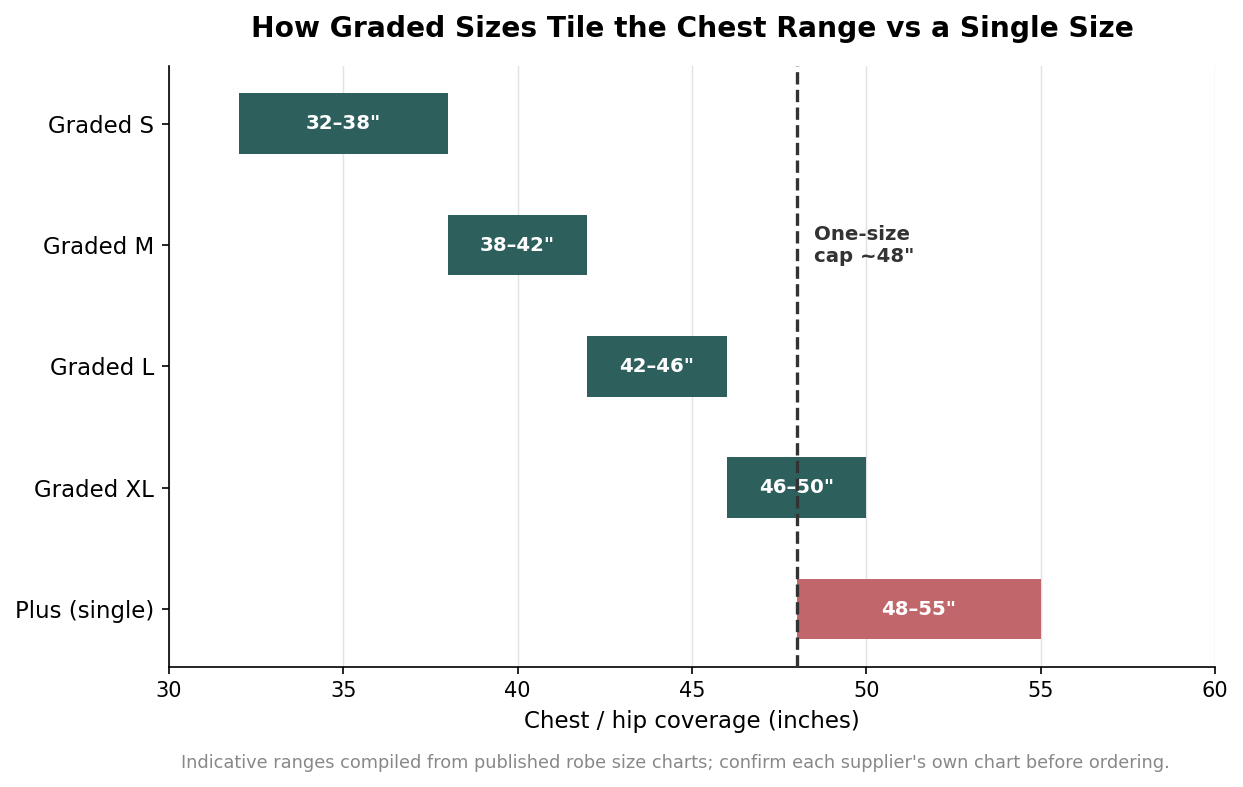
The first fork is whether you order a single generous cut or a graded size run, and it drives everything downstream. A one-size-fits-most kimono robe is engineered as a wrap rather than a fitted garment, and published size charts commonly rate a standard piece to fit up to roughly a 48-inch chest and hip, with plus-focused cuts extending to about 55 inches. That works because the robe closes with overlap and a tie, so a range of bodies can wear the same garment and still get a clean front. The trade-off is at the small end: on a petite wearer, a one-size robe reads as oversized and the shoulder seam drops down the arm.
A graded run in sizes small through extra-large solves the extremes but adds cost and forecasting risk, because you now have to predict the size mix of a group you may not have measured. For most event and retail orders, one-size-fits-most is the pragmatic default, with a separate plus cut added when your audience skews that way. Reserve a full graded run for programs where fit is part of the product, such as a spa that wants guests to feel tailored to rather than wrapped in a loaner.
Nail down length and sleeve
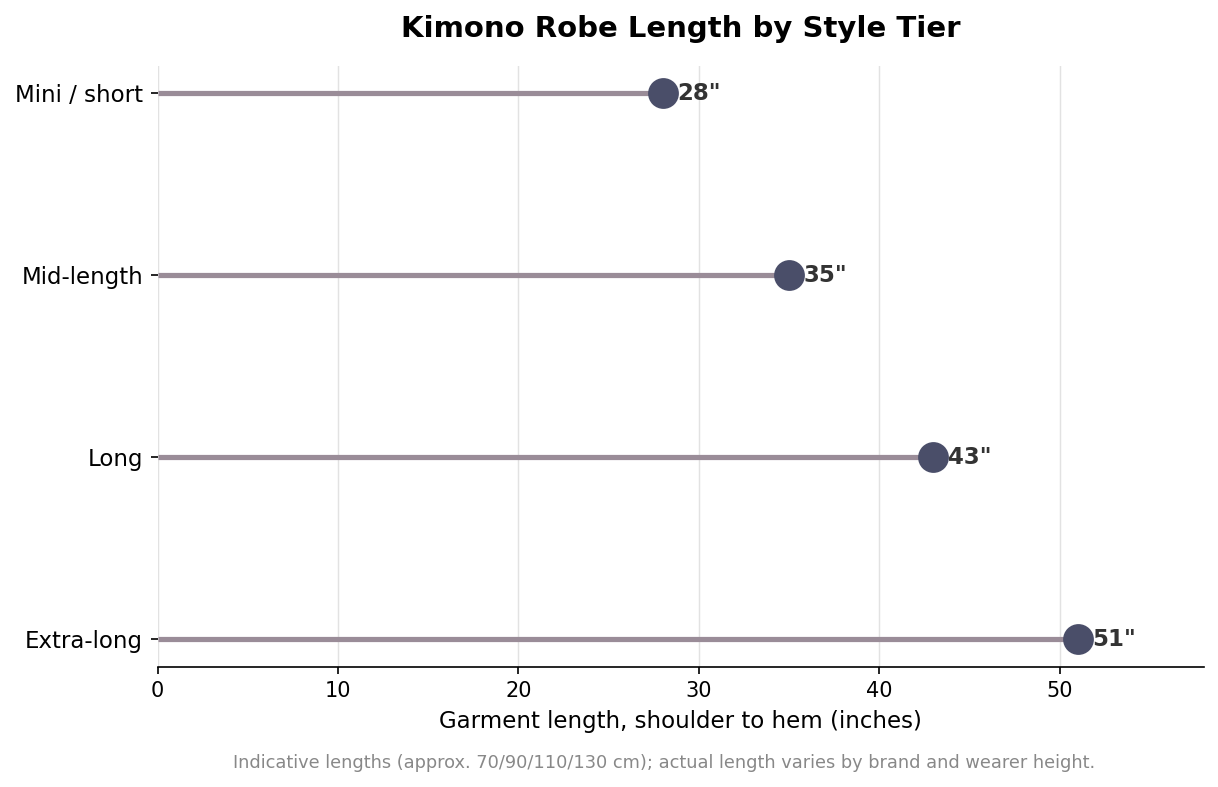
Length is the single most visible style decision and the one buyers most often leave vague. Kimono robes cluster into a few tiers: a mini or short cut lands around 28 inches from shoulder to hem and reads playful and modern, a mid-length sits near 35 inches, a long robe runs about 43 inches, and an extra-long or duster passes 50 inches for a dramatic floor-skimming look. Those are indicative figures measured shoulder to hem; the number that actually matters is where the hem lands on your wearers, so anchor the spec to a target such as mid-thigh or below-knee rather than to a raw measurement, since a 35-inch robe hits two very different points on a 5-foot-2 and a 5-foot-10 wearer.
Sleeve is the other lever. A classic charmeuse kimono often uses a T-shaped, roughly three-quarter sleeve with no shoulder seam, which photographs beautifully and drapes loosely, while heavier wrap styles carry a longer full sleeve with a set-in seam. If the robes will be worn in getting-ready photos, the sleeve shape shows in every frame, so specify it explicitly instead of accepting the factory default.
Give body measurements, not dress sizes
When you do collect sizing from a group, ask for chest and hip circumference in inches rather than a dress size, because vanity sizing and brand-to-brand drift make “medium” almost meaningless across a mixed crowd. The measuring method is simple enough to put in the invite: wrap a tape around the fullest part of the chest and the fullest part of the hips, and take the larger of the two numbers as the one to match against the chart. For a one-size order you are really just confirming that everyone falls under the coverage cap; for a graded order those two numbers place each person in a tier. Build in a little headroom, because a robe that closes with a couple of inches to spare looks deliberate, while one stretched to its limit gapes in photos and feels tight across the back.
Match the fabric to the setting
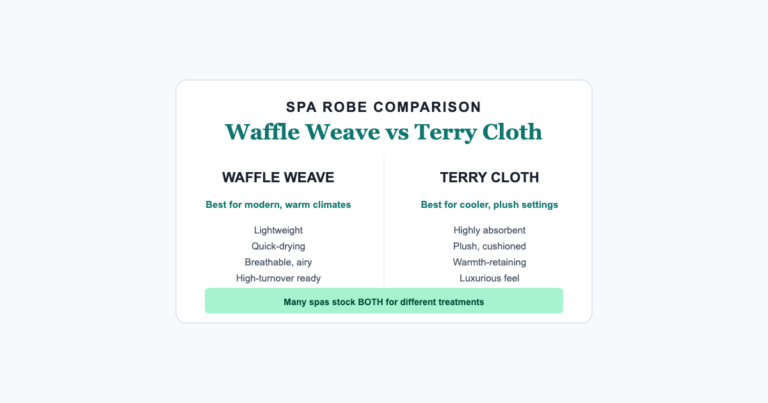
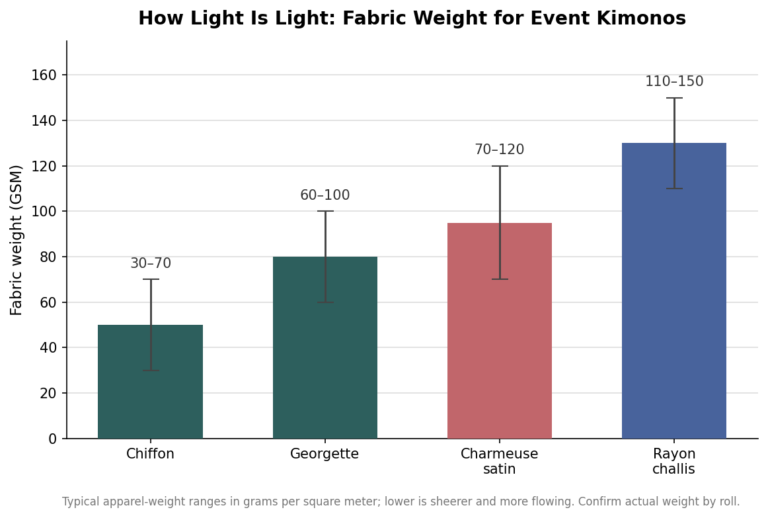
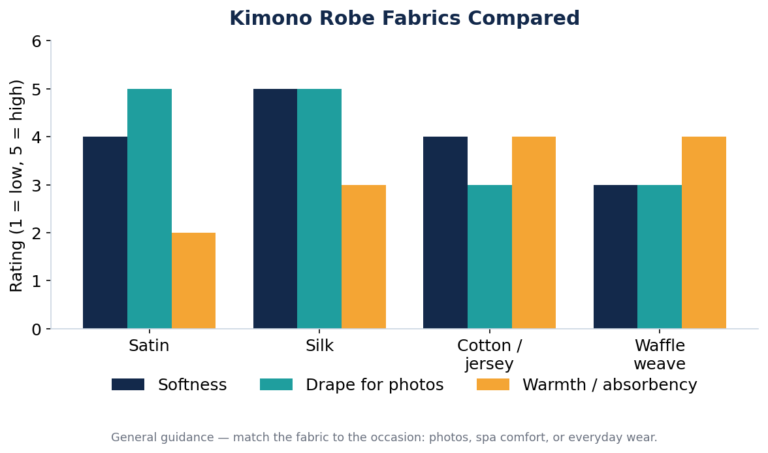
Fabric decides how the robe feels, how it photographs, and how your decoration sits, and the three common families behave differently. Lightweight satin and charmeuse have fluid drape and a sheen that reads luxe on camera, which is why they dominate bridal and event work, though they show wrinkles and take embroidery differently than a woven towel fabric. Waffle weave is a mid-weight, textured cotton or blend that feels crisp and travels well, a strong pick for spa retail and warm-weather festivals. Terry and velour are the heavyweights, plush and absorbent for genuine post-shower use but bulkier to ship and slower to dry. Fabric weight is usually expressed in grams per square meter, and heavier is not automatically better; a breezy festival robe and a plush hotel robe live at opposite ends of that scale on purpose. Decide the use case first and let it choose the weight.
Specify decoration, quantity, and lead time together
Decoration is where good specs earn their keep, because placement and method interact with the fabric you just chose. Embroidery gives a premium, durable finish that suits robes and monograms but needs a stable area to stitch and can pucker on the thinnest satins, while screen and heat-applied prints handle larger front or back graphics and lower per-unit costs at volume. Call out the exact placement, such as left chest for a monogram or center back for an event logo, along with size and thread or ink colors, and confirm how the decoration reads against a wrap that overlaps at the front, since a design placed too far toward the closure can disappear when the robe is tied.
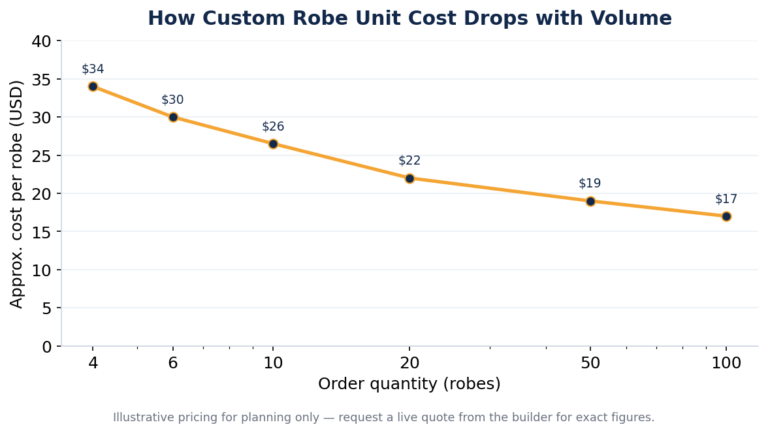
Finally, treat quantity and timeline as one decision. Personalization has minimums, and they stack: a decorator may set a per-design minimum while a fully custom-manufactured robe carries a higher fabric-and-color minimum on top of it, so a run with many individual names costs and schedules differently than a run of one repeated logo. Lead times for decorated apparel are typically measured in weeks rather than days once you account for proofing, production, and shipping, and rush handling narrows that window at a premium. Lock the wearer count, the size split, the decoration list, and the in-hands date at the same time, and share them with your supplier up front. The exact minimums, prices, and turnaround vary by vendor and by the specifics of your order, so confirm them in writing before you commit, and the robes that arrive will match the picture you had in your head.