Fabric for Custom Festival and Event Kimonos: Chiffon, Satin and the Print Reality
A festival or event kimono lives a very different life than a spa robe. It gets worn over swimwear or a going-out fit, photographed constantly, packed into a bag, and judged first on how it moves and how loud the print reads from across a crowd. That makes fabric the decision that drives everything else: the drape, the sheerness, whether your all-over graphic actually looks vivid, and what a bulk run costs per piece. If you are ordering matched kimonos for a festival crew, a brand activation, a bachelorette group, or a pool event, choose the fabric first and let the rest follow.
The lightweight sheer family: chiffon and georgette
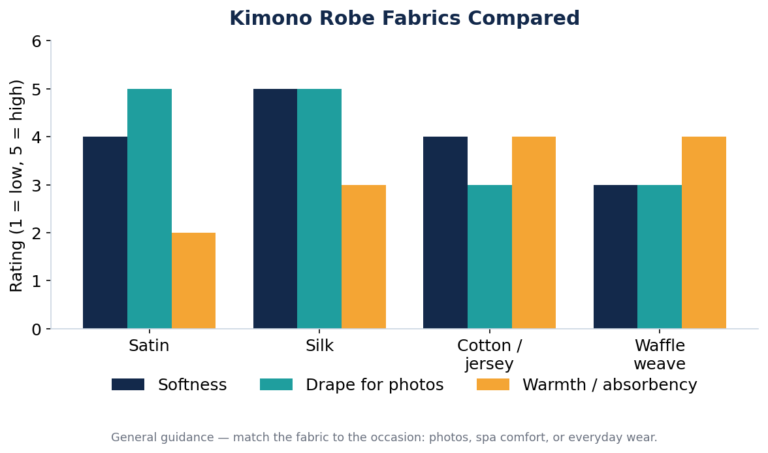
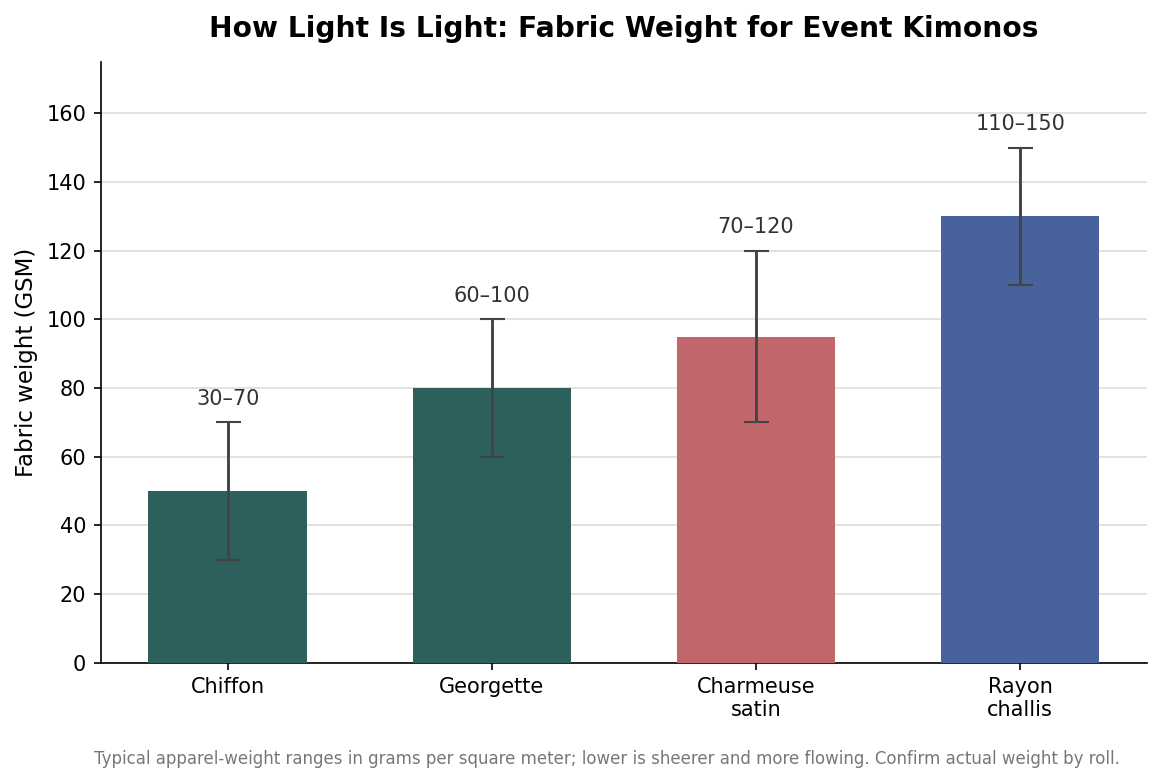
For that floating, catches-the-breeze look, you want the lightest fabrics on the table. Chiffon is the lightest mainstream option, typically 30 to 70 grams per square meter, which is why it reads as semi-sheer to fully sheer and drapes in soft, flowing lines. It is the classic festival and beach cover-up fabric for exactly that reason. Georgette is chiffon’s slightly heavier cousin at roughly 60 to 100 GSM, a little more opaque and a little more structured, which some buyers prefer when they want movement without the fully see-through effect. Both are almost always woven from polyester for event wear, and that matters enormously for how you decorate them, which we will get to.
The practical tradeoff with the sheer family is coverage and handling. A 40 GSM chiffon looks incredible in photos but is genuinely see-through, so plan on it being worn as a layer rather than a standalone garment, and expect the lightest weights to snag and need care in packing. If you want the flow but a touch more modesty and durability for a crowd of people who will be rough on them, georgette or a heavier chiffon near the top of that range is the safer group order.
Satin and natural fibers: sheen, weight, and hand
When the look you want is sheen rather than sheerness, charmeuse satin is the move. Apparel-weight charmeuse runs roughly 70 to 120 GSM, heavier than chiffon, with a liquid drape and a glossy face that photographs as luxe. It is the fabric behind most bridal-party and boudoir kimonos, and it works for events where you want the garment to look like a real robe rather than a gauzy overlay. Expect it to be less breathable than chiffon in hot sun, so weigh the venue.
Rayon challis and light cotton sit in a different lane. Challis is a soft, matte, drapey fabric usually in the 110 to 150 GSM range that feels natural against the skin and breathes well, which suits daytime and warm-weather events where a slick synthetic feels sweaty. The catch with natural and semi-synthetic fibers is printing, and it is the single most misunderstood point in event kimono ordering. These figures are typical apparel ranges rather than fixed specs, so confirm the actual weight of any roll before you commit a large run.
The print reality: why fiber content decides your graphic
Here is the fact that changes orders. The vivid, edge-to-edge, all-over prints that make festival kimonos pop are produced by dye-sublimation, and sublimation chemically bonds dye to polyester. On polyester chiffon, georgette, or satin, you get saturated, permanent, full-coverage graphics that do not crack, peel, or wash out, because the color becomes part of the fiber. That is why the overwhelming majority of printed event kimonos are polyester: the fabric choice and the print method are locked together.
Natural fibers break that chain. Silk, cotton, and rayon will not take sublimation, so an all-over print on those requires pigment or reactive printing, or a custom-printed base fabric, which changes cost, minimums, and often the vibrancy of the result, particularly for whites and fine detail. Embroidery and applied badges are the reliable way to brand a natural-fiber kimono, but they are a placed logo, not an all-over design. So the honest sequence is: decide whether you need an all-over graphic or a placed logo first, because that answer quietly rules fabrics in or out before you ever look at color.
Speccing a bulk event order
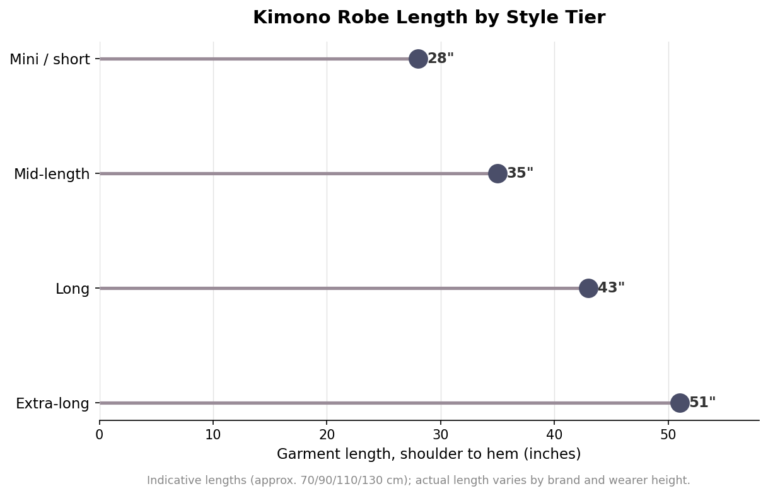
Once fabric and decoration are settled, the rest of a group order is straightforward if you are deliberate. Sizing for events leans toward generous one-size or a small size run, because open-front kimonos forgive fit far more than fitted garments, and a group photo looks best when everyone’s hem hits a similar point rather than matching exact measurements. Decide the silhouette you want on camera, a cropped over-swim layer versus a flowing mid-length or a dramatic floor-length duster, and communicate it as a target length for the average wearer rather than assuming a default.
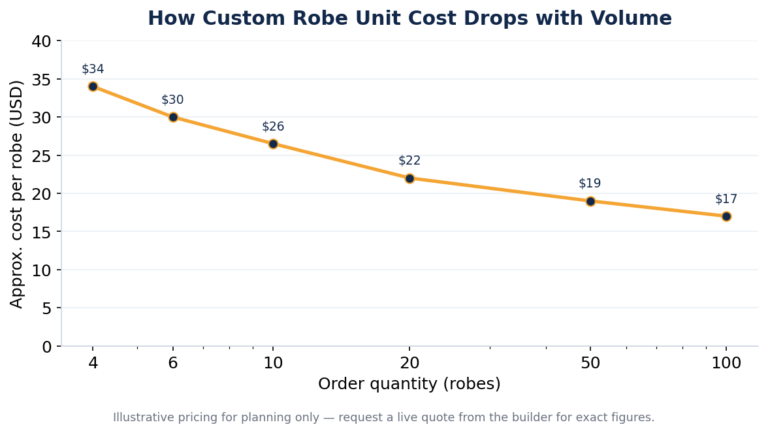
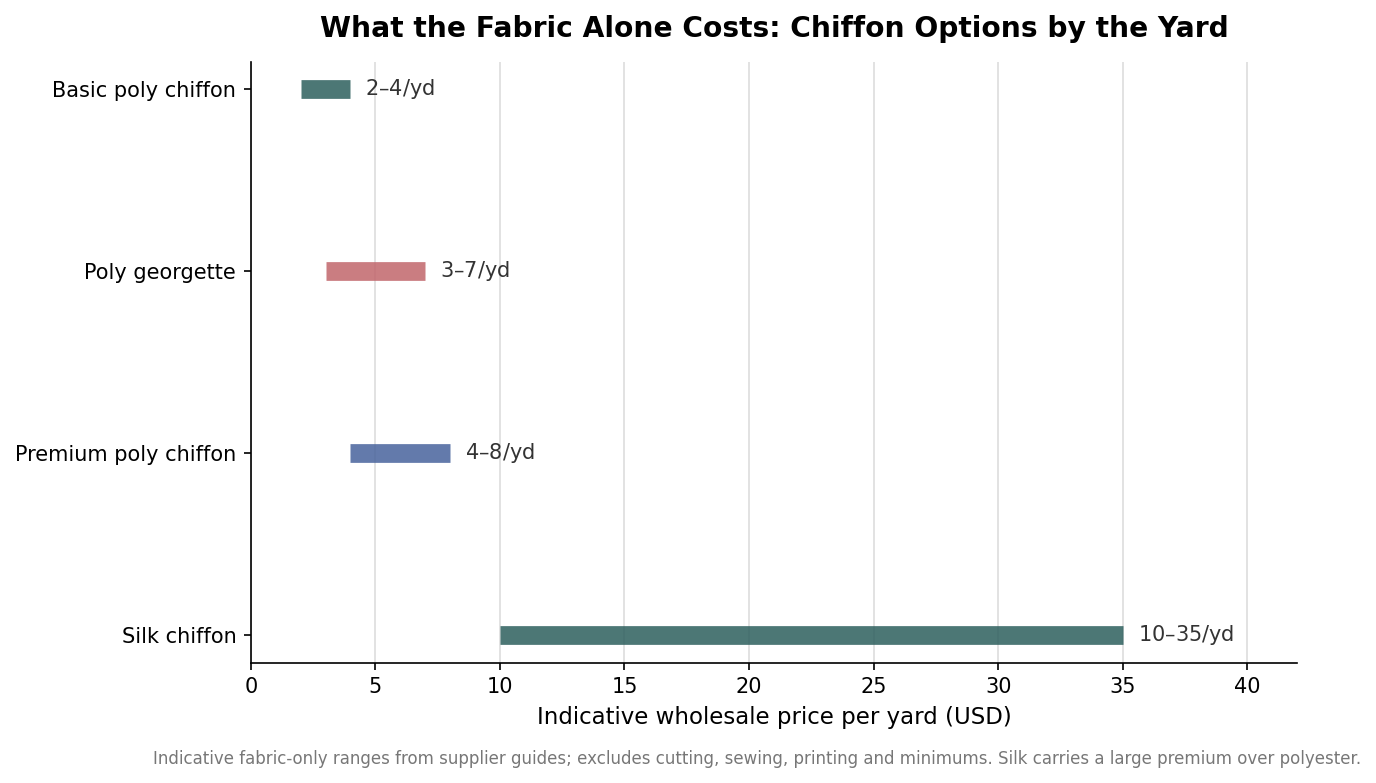
Budget realistically by separating fabric cost from finished cost. The per-yard figures above are the raw material only; cutting, sewing, sublimation printing, trims, and the supplier’s minimums are what actually set your per-piece price, and lightweight chiffon does not automatically mean a cheap finished garment once full-coverage printing is added. Ask about minimum order quantities early, since all-over sublimation usually carries a higher minimum than a placed logo. Finally, plan care instructions into the handoff: polyester event kimonos generally wash cool and hang dry well, which is a real advantage for pieces that will be worn hard over a festival weekend and need to look good in every photo. Get the fabric and the print method right, and a matched set of kimonos becomes the thing everyone in the group actually keeps and wears again. The prices and weights here are indicative ranges to guide the conversation; confirm exact specifications with your supplier for the specific fabric and run you order.